Thursday, November 18, 2010

Fashion inspired by art

1. Origami is the traditional Japanese folk art of paper folding, hasadapted many fashion designers to produce fascinating art pieces. Today we can see Japan's influence in all facets of life; cars, games etc and recently its making an evident mark in the world of fashion. Spring 2009 collection by designer André Lima is inspired by origami. This beautiful artistic ensemble can urge anyone to find a piece of paper to fold.
AndrĂ© Lima's creation inspired by origami

2. Alexander McQueen often finds inspiration from art and artists and his resort 2010 was inspired by Jackson Pollock's paintings. The inspiration was evident in the paint splatters on jeans and M.C. Escher optical prints seen above on leggings and dresses in this innovative collection.


Jackson Pollock's paintings.


3. ‘Art Nouveau’ an international movement and style of art, architecture and the decorative arts popular in the 20th century inspired many fashion designers. Recently Alexander McQueen and Prada presented the collection based on this art. Below is  woven tunic with a floral crochet top and a waist tie sash is from  Forever 21 which adopts Art Nouveau's intricate design forms .


4. Paying a fashionable tribute to the work of Tord Boontje, Marchesa designer Georgina Chapman designed a laser cut satin strapless gown. The designer has beautifully adaped the cut out designs of Tord into tulle dress with organza flower detail. It’s an true example how technology can be combined with elegance.
                                             Tord Boontje's art peices
 5. A white porcelain vase with a rope design in iron underglaze from the National Museum of Korea inspired Choi Ji-hyung to design this dress for his 2010 collection. This was designed for a  show co-hosted by the museum and the Korea Fashion Association in celebration of the 100th anniversary of the opening of the first museum in Korea.

6. Paintings of one of the famous artist of 20th Century Pablo Picasso have srved as inspiration for many designers. Diane von Furstenberg made the following dress inspired by Picasso’s painting.
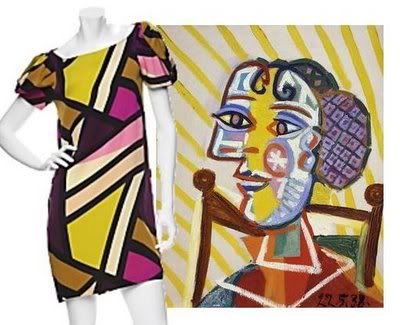
Diane von Furstenberg dress inspired by Picasso
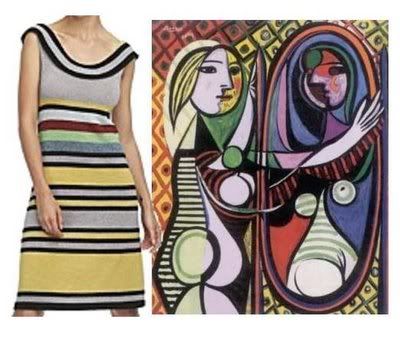
A design by L.A.M.B. inspired by Picasso’s painting.


Saturday, November 13, 2010

Revival of Maxi dress

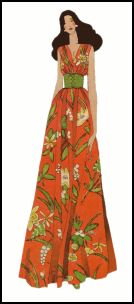
“Maxi-Dress” first appeared into fashion in 1968. A maxi dress in cotton lace designed by Osca de La Renta for Elizabeth Arden Salon was published in the New York Times. The Maxi-dress wedged itself firmly in the American mind in 1970’s along with similar caftan and boho styles. To begin with, Maxi-dresses were lacey and slightly shorter than ankle length in comparison to today’s versions ofmostly cotton jersey and down to the heel.


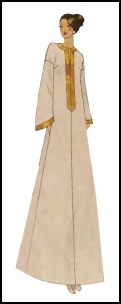
In 1970’s long maxi dresses were generally worn for evening and day wear. The caftan, either full length or as a tunic top; the halter neckline and the peasant girl folkloric effect were some of the popular designs of 70’s. The caftan style (often called a Kaftan) had wide sleeves and finished with metallic braid, contrast fabric or gold embroidery. The traditional Swiss/Austrian styles embroidered braid finishing used on peasant style. 
Maxi peasant dress                                                                Caftan

Inspired by the late 60s and early 70s Andrew Gn in his  Spring 2011 collection reinvented the maxi dress. The maxi peasant dresses in neutral tones of blacks, browns, and khakis, gradually lighting with teal, purple, and pink were accentuated with white flower hairpins and platform cork wedges.


These maxi dresses are reinvented in terms of fabric, Gn has provided a look in such fine printed silks and crepes which the designers of 70’s might have not worked with.  The basic shape of dress is quite similar to that of past.


The difference is the necklines the designers has worked with off shoulder, one shoulder, deep square, deep V and halter necklines as compared to neck clinging shapes of past.  


                         Bond Street Fashion Market London in 1968


the 1968 Elizabeth Arden fashion show

Wednesday, November 3, 2010

Jumpsuit

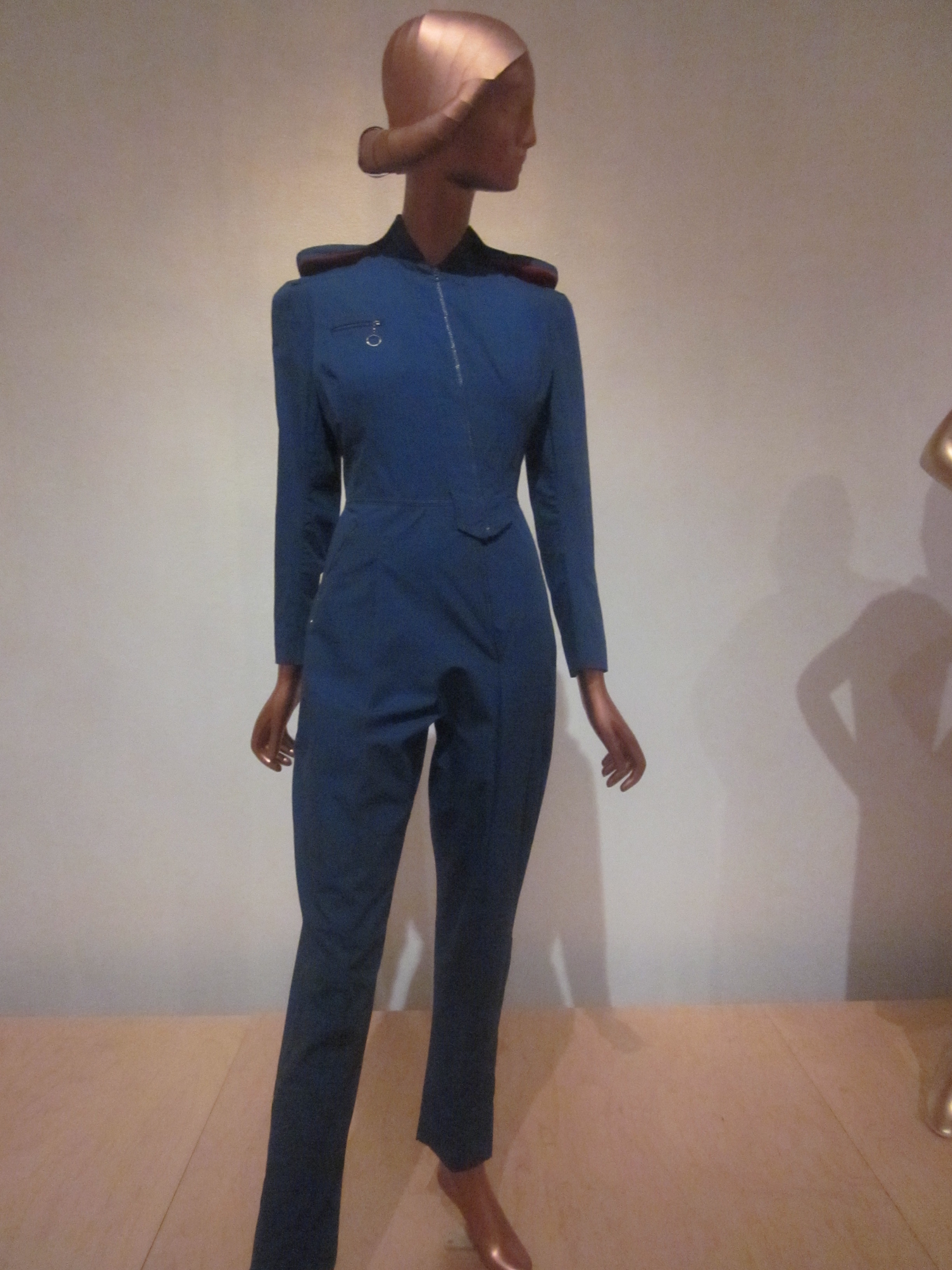
Jumpsuit a versatile garment came into existence in 1913 as the Lee-Union-All, created by the H.D. Lee Mercantile Company later it was adopted as WWI women’s factory uniform created in 1918. Eventually several couture and ready to wear pieces has been created by designers. Worn by farmers, skydivers, mechanics, iconic musicians, olympic destined world-record breaking swimmers, soldiers it has become theorized garment of the future. The jumpsuit maintains a fluid indistinctness of purpose and place right from it’s advent in 20th century to till today. One-piece construction and easy-off center front zipper of jumpsuit generates its useful practicality and also enhances the sex appeal.

 ‘Rosie the Riveter,'
      Lee-Union-All   

                                                                 
During 1930' women wore jumpsuit at beach to impress people.

The width of the bottom of leg was also played with in this decade and was adopted as sports wear.
Cover of Vogue 1937 shows the kind of jump-suit affair that was also popular
1930s  JUMPSUIT or  1 PC PAJAMAS PATTERN  CLAUDETTE COLBERT HOLLYWOOD PATTERN

Jumpsuit was adopted by Hollywood actresses as fashion item. Designers experimented with some new fabrics like velvet.

1940’s Edith Phillips of Hollywood Jumpsuit in black velvet
                                                 
1940s jumpsuit, worn by women working in the factories
                                              
Jumpsuits could be short or long during 1940's                


1950s STRAPLESS JUMPSUIT

1960’s was a time when the Jump Suit was a popular style for women as it became more acceptable for them to wear pants.

Elvis Presley's a music icon wore the jumpsuits for his performances. Recently this peacock jumpsuit sold at auction for $300,000-. During 1960’s-70 the peacock motifs were very popular and Elvis paid $10,000 for this outfit designed for him in the early 1970's by Los Angeles designer Bill Belew.


Jumpsuit with jacket in 1987 pattern by simplicity


Tribal batik print jumpsuit Lable: We Be Bop 1990

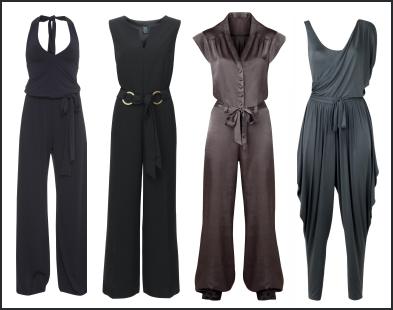
Jumpsuits’ has made regular re-appearances in both mass market and high fashion as a trendy wardrobe supplemental item. Here are some recent styles of jumpsuits by some current designers.
First Left - Wallis Spring Summer 09, Navy halter jumpsuit .
Second Left - Marks & Spencer Spring Summer 2009.  Black Portfolio Jumpsuit. This is spectacular and figure enhancing jumpsuit.
Centre Right - Dorothy Perkins SS 09, Mink satin jumpsuit with cuffed ankles.
Near Right - Dorothy Perkins Spring Summer 09. Charcoal shoulder-drape jumpsuit.


Kim Kardashian in a sexy sleeveless jumpsuit


From L to R: Emmanuelle Chriqui (in Stella McCartney), Rihanna (in Sonia Rykiel), Gwyneth Paltrow (in Stella McCartney)

Today designers are revisitin the traditional style of jumsuits and we can see variety and next incarnation
with wide or narrow leg bottom, with or without straps, with jackets, harem pant style, off shoulders and so on.


Saturday, October 30, 2010

Military Fashion

A collection “soldiers of our heritage”  by designer Nuno Gama presented in Lisbon Fashion week Portuguese has a strong military reference mixed with traditional Portuguese clothing. The collection, inspired by a longing for immense nature spaces and large shelters, had felt army coats with natural leather belts, comfortable shearling jackets, pea coats with fur collar or lining, short jackets with leather strap details mixed with pauliteiros with their full white look & colorful minhoto-style kerchiefs. The faces of models were covered with Mexican style wrestling mask.

                 Leather straps                                                     Military style Buttons


Different interpretation of camouflage                             Leather belt on arm and buttons and military color


Formal interpretation of military fashion with leather belts and buttons on formal coat.